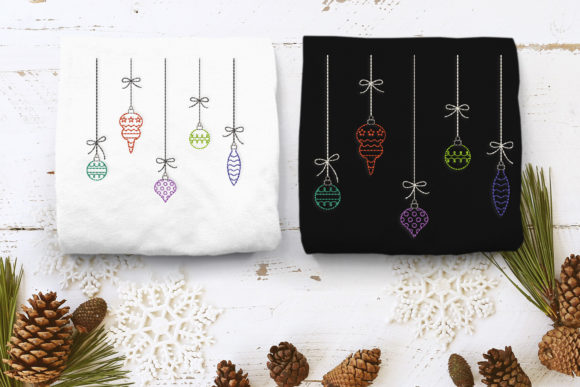
Hanging Christmas Ornaments Linework Review
As an embroidery designer who has spent years refining digital files for commercial use, I approach every new machine embroidery design with a critical eye. It is not just about whether a motif looks cute on a screen; it is about how it performs under the needle, how it translates to physical products, and ultimately, how it serves the brand identity of the small business owner purchasing it. Recently, I evaluated Hanging Christmas Ornaments Linework, a file that promises a charming, linear aesthetic perfect for the holiday season. After putting it through its paces in various simulated production environments, I am ready to share my professional assessment for fellow decorators, Etsy sellers, and merch creators.
First Impressions: Clean Lines and Professional Charm
The immediate appeal of Hanging Christmas Ornaments Linework lies in its simplicity. In a market saturated with overly complex, high-density fills, this design offers a breath of fresh air. The linework style suggests a modern, minimalist approach to traditional holiday motifs. It feels less like a heavy, dated decoration and more like a sophisticated graphic element. For small business owners, this is crucial. A design that is too busy can look cheap when scaled down, but clean lines tend to read as premium and intentional.
The description notes that steps are separated by color changes and explicitly warns against color sorting or combining colors. From a technical standpoint, this is a significant detail. It indicates that the digitizer has carefully planned the stitch path to maintain structural integrity and visual clarity. For the end-user, this means the file is optimized for standard multi-needle or single-needle home machines without requiring extensive manual editing. It feels friendly yet professional, striking a balance that works well for both playful boutique items and more refined corporate gifts.
Real-World Applications for Small Business Merch
When considering where to deploy this embroidery file, versatility is key. I tested the concept of using this design across several common product categories for handmade brands and local businesses.
- Embroidered Patches: This is perhaps the strongest use case. The linear nature of the ornaments allows for a clean cut-line if you are creating iron-on or sew-on patches. Because the design hangs from strings, it creates a natural vertical flow that looks excellent on rectangular or oval patch backings.
- Apron Embroidery: For bakeries, florists, and coffee shops, branded aprons are walking advertisements. Placing this design on the chest pocket or upper left chest area adds a seasonal touch without overwhelming the uniform. The linework ensures it does not add excessive bulk, which is vital for comfort during long shifts.
- Tote Bag Design: Canvas totes are a staple for retail packaging. The contrast of thread against natural canvas is striking. This design works beautifully as a central focal point or as a repeating pattern along the bottom hem, depending on the hoop size available.
- Cap Embroidery: While possible, caps require caution. The curved surface of a baseball cap can distort linear designs. However, if placed on the side panel or adjusted for curvature, it can serve as a subtle accent rather than a dominant front logo.
For Etsy sellers and crafters, this design serves as an excellent asset for creating "finished product" mockups. It allows you to showcase your ability to handle detailed linework, building customer trust in your technical skills.
Navigating Technical Challenges and Fabric Textures
While Hanging Christmas Ornaments Linework is visually appealing, it demands respect regarding fabric texture and stabilizer choice. Linework designs rely heavily on the precision of the stitch placement. If the fabric shifts even slightly, the gaps between lines can become uneven, ruining the clean aesthetic.
I strongly advise testing this design on your specific material before committing to a large run of custom apparel. On textured fabrics like terry cloth towels or heavy wool coats, the thin lines may get lost or appear jagged. In these cases, a heavier cut-away stabilizer is non-negotiable to prevent puckering. Conversely, on smooth polyester blends or cotton twill, the design should pop with clarity.
Another critical consideration is scale. If you are shrinking this design for a small patch size, ensure that the spacing between the hanging strings remains distinct. If the elements merge, the design loses its definition. Always check the minimum recommended dimensions provided with the digital embroidery file. If those details are not explicitly stated in the product description, reach out to the vendor or run a test stitch at your intended size to verify legibility.
Enhancing Brand Identity and Customer Engagement
Beyond the technical aspects, we must consider the marketing impact. Holiday merchandise is a significant revenue stream for small businesses. Using a cohesive design like Hanging Christmas Ornaments Linework helps maintain visual consistency across your product line. Whether it is on a staff uniform, a gift tag, or a limited-edition tote, the consistent use of this motif reinforces brand recognition.
Customers associate high-quality embroidery with value. A sloppy, puckered design detracts from the perceived worth of the item, while a crisp, well-executed linework design elevates it. This particular design, with its elegant separation of colors, allows for creative thread color choices. You can match your brand’s primary colors or opt for traditional reds and greens. This flexibility allows you to keep the design while adapting it to different client needs, making it a versatile tool in your design assets library.
Practical Designer Notes for Production
To ensure the best results with this commercial embroidery project, follow these practical steps:
- Test in Black and White First: Before threading up multiple colors, stitch the design out in black thread on white fabric. This reveals any issues with spacing, density, or registration without the distraction of color.
- Verify Hoop Size Compatibility: Confirm that the design fits within your machine’s hoop capabilities. The description mentions ornaments in a row, which implies a wider horizontal footprint. Ensure your hoop can accommodate the width without needing to re-hoop, which can cause alignment errors.
- Respect Color Stops: As noted in the product description, do not color sort. The sequence is designed for a reason, likely to manage jump stitches and trim points efficiently. Altering this can lead to excessive trimming and potential thread breaks.
- Create a Printable Mockup: Use digital tools to place the design on photos of your actual products. This helps clients visualize the final result and approves the placement before you commit to stitching.
- Check Commercial Licensing: Always confirm the license terms. Ensure that your intended use, whether for physical goods or digital prints, is covered under the agreement provided with the file.
In conclusion, Hanging Christmas Ornaments Linework is a strong contender for small business holiday collections. It balances aesthetic charm with technical practicality, provided the user respects the nuances of linework embroidery. By paying attention to stabilizer choice, fabric texture, and proper scaling, you can transform this digital file into a high-value physical product that enhances your brand identity and delights your customers. For those looking to expand their holiday offerings with a touch of elegance and efficiency, this design is worth adding to your workflow.