Reviewing the Christmas Bow for Personalized Gifts
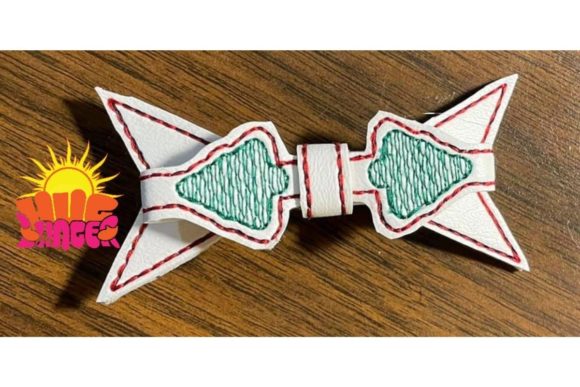
As an embroidery designer who has spent years digitizing and testing patterns for small businesses, I approach every new machine embroidery design with a critical eye. It is not enough for a pattern to look cute on a screen; it must perform flawlessly under the needle, especially when destined for a personalized gift that carries emotional weight. Recently, I tested the Christmas Bow design to see if it truly lives up to its promise as an adorable and easy-to-make accessory for the holiday season. My goal was to determine if this pattern could serve as a reliable staple for Etsy sellers, craft fair vendors, and boutique owners looking to elevate their winter inventory.
First Impressions: Mood and Aesthetic Appeal
The moment I loaded the digital embroidery file into my software, the charm of the Christmas Bow was immediately apparent. The design exudes a playful yet classic holiday spirit. It strikes a delicate balance between whimsical and elegant, making it versatile enough for various demographics. For baby product creators, the soft curves and festive motif feel sweet and welcoming. For wedding gift designers or those creating family keepsakes, the bow offers a touch of romantic nostalgia without being overly ornate.
What stands out most is the emotional appeal. In the world of handmade products, customers are buying a feeling as much as they are buying an object. This design feels warm and inviting, evoking memories of wrapped presents and decorated trees. It does not scream "modern" or "abstract"; instead, it leans into a timeless seasonal aesthetic that appeals to traditionalists and modern crafters alike. This broad appeal is crucial for small shop owners who need designs that convert across different customer segments.
Versatility Across Product Lines
One of the strongest assets of the Christmas Bow is its adaptability. During my review, I visualized this design on several different substrates to gauge its potential. Here is how it performs across key categories:
- Baby Embroidery: The design works beautifully on soft flannel or minky fabrics for baby blankets. Its compact nature means it does not overwhelm small items like burp cloths or onesies, adding a festive touch without compromising comfort.
- Kitchen and Home Decor: An embroidered towel featuring this bow becomes an instant heirloom. It also shines on pillow covers and aprons, turning standard household items into cherished holiday decor.
- Tote Bags and Apparel: For custom tote bags or sweatshirts, the bow acts as a perfect focal point. It is distinct enough to be recognized from a distance but detailed enough to reward closer inspection.
- Wedding and Keepsake Gifts: While primarily a Christmas motif, the elegance of a bow can transcend seasons if stitched in non-traditional thread colors, making it suitable for winter weddings or anniversary gifts.
For an Etsy seller, this versatility means you can create multiple listings from a single purchase. You can market the same embroidery file as part of a nursery set, a kitchen upgrade, or a personalized stocking stuffer, maximizing your return on investment.
Navigating Technical Challenges and Fabric Textures
While the Christmas Bow is described as easy to make, experienced embroiderers know that "easy" is relative to fabric choice and machine setup. I encountered specific scenarios where caution is required. When working with textured fabrics, such as thick terry cloth towels or waffle-weave blankets, the finer details of the bow can get lost. In these cases, increasing the stitch density slightly or using a contrasting underlay can help the design pop.
Stretchy baby clothes present another challenge. If you are applying this design to a knit onesie, proper stabilization is non-negotiable. A cut-away stabilizer is often safer than tear-away for garments that will undergo frequent washing and stretching. Additionally, dark fabrics require careful planning. If you are stitching a red or green bow on a navy or black background, ensure your thread colors have enough brightness to stand out. A test stitch on scrap fabric is essential to confirm that the thread colors do not blend into the background, ruining the visual impact.
Curved surfaces, such as the cuff of a sock or the corner of a pillow, also demand attention. Hooping these items correctly ensures the bow does not distort. Always check the recommended hoop size in the file documentation. If the design is too large for a small hoop, you may need to resize it, which can affect stitch quality. Always verify the integrity of the design after resizing.
Enhancing Perceived Value and Customer Trust
From a business perspective, the quality of your embroidery directly influences customer trust. A clean, well-executed Christmas Bow signals professionalism. When a customer receives a finished product with neat stitches, no bird’s nests, and precise alignment, their perceived value of the item increases. This leads to higher customer satisfaction, positive reviews, and repeat business.
Photography plays a huge role here. A well-stitched bow provides a excellent subject for product photography. The symmetry and color contrast make it easy to capture engaging images for social media and online listings. Using a printable mockup can help you visualize the final result before stitching, but nothing replaces the tactile reality of the embroidered item. High-quality images of the actual stitched bow can significantly boost buyer engagement and conversion rates.
Practical Steps for Successful Execution
To ensure the best results with the Christmas Bow, I recommend following these practical steps before fulfilling customer orders:
- Test on Scrap Fabric: Never stitch a new design directly on a final product. Use a scrap piece of the exact same fabric and stabilizer combination you plan to use.
- Check Thread Contrast: Verify that your chosen thread colors provide sufficient contrast against the fabric. Adjust shades if necessary to maintain visibility.
- Confirm Hoop Size: Ensure your machine’s hoop accommodates the design dimensions. If resizing is needed, do so in small increments to preserve stitch integrity.
- Review Stitch Density: Examine the digitizing quality. If the density is too high for lightweight fabrics, it may cause puckering. If too low for heavy fabrics, the backing may show through.
- Use Proper Stabilizer: Match the stabilizer to the fabric type. Use cut-away for knits and stretchy materials, and tear-away for stable woven fabrics.
- Inspect Small Details: After stitching, check the loops and tails of the bow. Ensure they are crisp and not tangled. Trim any loose threads meticulously.
- Verify Licensing: Before selling items made with this design, confirm the commercial licensing terms. Ensure you have the right to sell commercial embroidery products using this specific digital embroidery file.
Final Verdict for Small Business Owners
The Christmas Bow is a strong contender for any holiday-themed collection. It offers the right mix of simplicity and charm, making it accessible for beginners while still looking professional enough for seasoned small shop products. Its ability to adapt to various items—from blanket embroidery to tote bags—makes it a cost-effective addition to your library.
However, success lies in the execution. By paying attention to fabric texture, stabilizer choice, and thread contrast, you can transform this simple design into a high-value custom embroidery piece. For those looking to expand their holiday offerings, this design provides a solid foundation for creating meaningful, memorable gifts that resonate with customers seeking that special handmade touch.