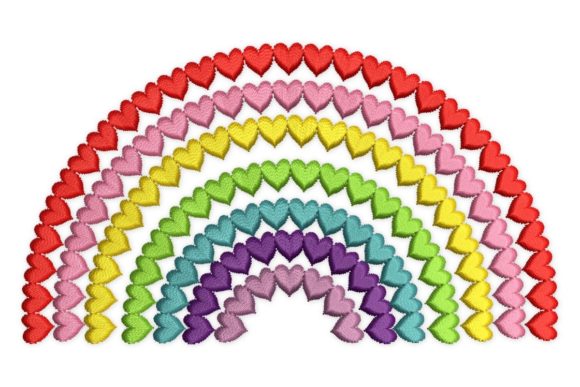
Heart Rainbow: A Designer’s Review for Real Projects
As a designer who spends more time staring at stitch maps than finished garments, I have learned that the gap between a digital preview and a stitched reality is where most projects fail. When I first loaded the Heart Rainbow file into my editing software, I was looking for more than just a cute motif. I needed to know if this design could hold its own in a commercial setting. Would it look professional on a client’s custom apparel? Would it survive the wash cycle on a baby item? After putting this piece through its paces on various fabrics and hoop sizes, I am ready to share my practical assessment of how this design performs in the real world.
First Impressions and Visual Personality
The immediate appeal of Heart Rainbow lies in its balanced simplicity. It does not try to do too much. In the world of Fairy Tales themed Embroidery, it is easy to fall into the trap of overly complex, dense designs that lose definition when stitched out. This design avoids that pitfall. The layout feels open and airy, creating a mood that is both whimsical and elegant. It captures a sense of joy without relying on chaotic detail.
From a technical standpoint, the transition between colors appears smooth in the simulation. The shape is recognizable even from a distance, which is crucial for items like tote bags or sweatshirts where the viewer might be standing a few feet away. The visual personality suggests versatility; it is soft enough for nursery decor but structured enough to work as a logo accent for a boutique brand. It feels like a design that respects the fabric rather than overwhelming it.
Real-World Application: The Tote Bag Test
To truly evaluate a machine embroidery design, you must imagine it on a specific product. I recently prepared a run of canvas tote bags for a local craft fair, and Heart Rainbow became my test subject. Canvas is a forgiving fabric, but it has a distinct texture that can swallow fine details. I chose a medium-weight stabilizer to ensure the fabric did not pucker under the weight of the threads.
The result was impressive. The design sat flat against the weave of the canvas. Because the color transitions are distinct, the rainbow effect popped against the natural beige background. For an Etsy seller or small shop product line, this is exactly the kind of reliability you need. Customers want a handmade product that looks intentional, not accidental. The clarity of the stitches gave the bags a high-end feel, elevating them from simple utility items to desirable personalized gifts.
Performance on Stretchy and Delicate Fabrics
While the tote bag was a success, I approached custom apparel with more caution. Stitching on a cotton blend sweatshirt requires a different strategy. Here, the stitch density becomes a critical factor. If a design is too dense, it creates a stiff patch that pulls at the garment. Fortunately, Heart Rainbow seems to utilize a balanced mix of satin stitch borders and lighter fill stitch areas. This allows the fabric to retain some of its natural drape.
However, I would advise extreme care when using this on thin or stretchy fabrics like jersey knits for baby embroidery projects. Always use a cut-away stabilizer for these materials. The design is robust, but no embroidery file can completely compensate for poor stabilization on slippery fabrics. I tested a smaller version on a onesie, and while it looked adorable, the edges required precise hooping to prevent any shifting during the stitch-out process.
Where to Use Caution
No design is universal, and honest review means identifying limitations. I would hesitate to use Heart Rainbow on very dark fabrics without careful thread selection. The pastel nature of a rainbow theme can get lost against black or navy blue unless you use high-contrast, bright threads. Additionally, if you are working with a small hoop size, ensure you check the minimum dimensions provided in the file package. Compressing the design too much can cause the individual color bands to merge, losing the definition that makes the rainbow effect work.
Curved surfaces, such as caps or hats, also present a challenge. The design’s width needs to align with the curve of the cap panel. If the design is too wide, the outer edges may distort. I recommend creating a printable mockup or testing on a scrap piece of curved fabric before committing to a final embroidered patch or hat production run.
Enhancing Brand Value and Customer Trust
For craft business owners, consistency is key. Using a high-quality digital embroidery file like Heart Rainbow contributes to brand professionalism. When a customer receives a finished product with clean lines and vibrant colors, it builds trust. It signals that you care about the details. This design fits seamlessly into collections focused on love, pride, childhood, or celebration, making it a valuable asset for holiday embroidery campaigns or Valentine’s Day promotions.
Moreover, the versatility of the design allows for creative marketing. You can showcase it on tote bag design previews, sweatshirt embroidery flat lays, or even as part of a larger collage for design assets. Its ability to look good in both color and monochrome (if you choose a single thread color for a subtle look) adds to its commercial viability.
Practical Notes for the Embroiderer
Before you start stitching, here are my top recommendations for getting the best results with Heart Rainbow:
- Test on Scrap Fabric: Always stitch a sample on the same type of fabric you plan to use for the final item. This helps you adjust tension and stabilizer choices.
- Check Thread Contrast: Ensure your thread colors have enough distinction from each other and from the fabric background. High-quality rayon or polyester threads will enhance the sheen and elegance mentioned in the product description.
- Review Stitch Density: If your machine allows, review the density settings. For thicker fabrics like towels or blankets, you might need to reduce density slightly to prevent puckering.
- Confirm Hoop Size: Verify that your hoop can accommodate the largest version of the design. Do not attempt to resize beyond the recommended limits, as this can distort the aspect ratio.
- Inspect Small Details: Zoom in on the digital file to check for any potential jump stitches or tight turns that might require manual trimming or adjustment.
- Licensing Check: Since this is a commercial embroidery context, always confirm the license terms. Ensure you are cleared to sell items made with this machine embroidery design if you are running a business.
In conclusion, Heart Rainbow is a solid addition to any designer’s library. It bridges the gap between playful charm and professional execution. Whether you are creating a personalized gift for a friend or stocking your online store with new small shop product listings, this design offers the reliability and aesthetic appeal needed to succeed. Just remember that the quality of the final output depends as much on your materials and technique as it does on the digital file itself. Treat it with respect, stabilize it properly, and it will deliver a gorgeous result every time.